Why Are Cam Straps the Best Choice for Kayaks?
A kayak can feel steady on the water and surprisingly awkward on a car roof. Its long hull shifts when wind catches it, while a loose strap can let it slide during braking. Choosing a tie-down is not a minor detail. It is part of a safe, repeatable loading routine.
Cam straps are popular because they are simple to thread, adjust, and release. A cam buckle grips webbing without the strong leverage of a ratchet, which can make controlled tightening easier. That matters with many recreational kayaks, whose plastic hulls may deform under excessive pressure. The strap should hold the boat securely, not crush it.
Look for durable webbing, a buckle that closes cleanly, and a length suited to your rack and hull. The Best Cam Straps For Kayak should also fit your loading habits; a strap that is difficult to reach may encourage rushed tying. Small details matter. Check for twists, worn stitching, and buckle damage before each trip.
Cam straps are not a complete safety system by themselves. Secure the kayak to appropriate rack points, follow the rack and vehicle manufacturers’ instructions, and recheck tension after driving a short distance. I would not assume that one tight pull proves everything is secure. Wind, road vibration, and a poorly positioned boat can change the setup. This guide explains why cam straps often make a practical choice, what features deserve attention, and where careful use still matters.
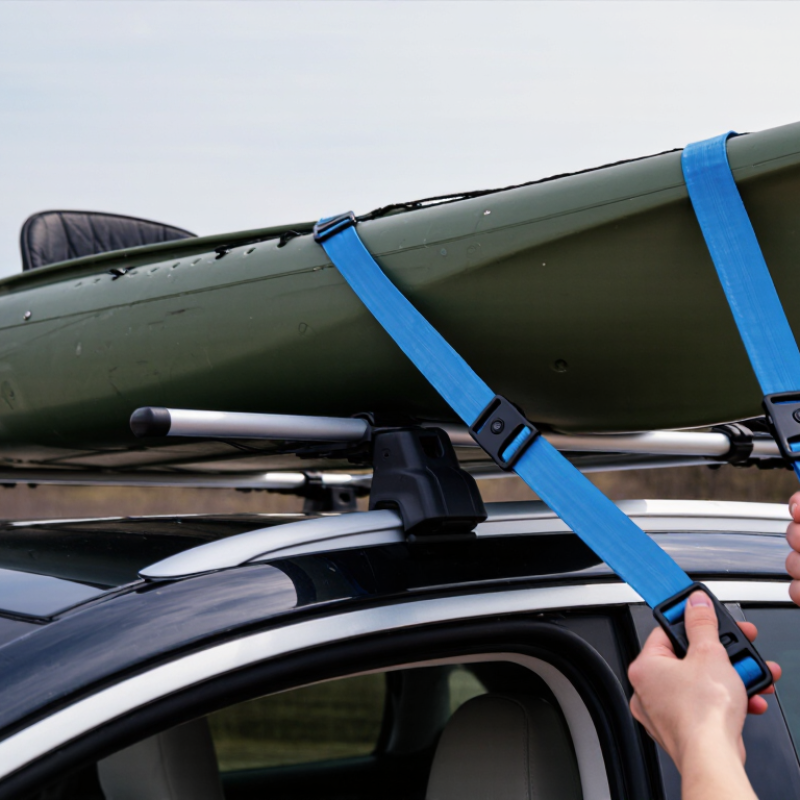
What Cam Straps Are and How Their Buckles Work
A cam strap is a length of flat webbing with a spring-loaded buckle. Feed the loose end through the buckle’s slot, pull it tight, then release the lever. Inside, a serrated cam presses the webbing against the buckle body. Friction holds tension; the mechanism does not wind the strap like a ratchet. That makes adjustment quick, but correct threading matters.
The European standard EN 12195-2 covers textile lashing straps and their performance information, including lashing capacity markings. Check the rating on the strap itself, and do not treat it as the safe capacity of your entire kayak-and-roof system. The European Commission’s cargo-securing guidelines use road-force benchmarks of 0.8 g forward and 0.5 g sideways or rearward. Those figures describe cargo-securing conditions, not a kayak strap’s rating. Still, they show why a snug fit matters.
For a kayak, place the webbing over the hull without twisting it, and keep the buckle away from fragile edges. Pull until the boat cannot shift, but avoid crushing the hull. A click is not proof of security. Check the strap after driving a short distance; webbing can settle, and an imperfect first pull is easy to miss.
How Cam Straps Hold a Kayak Securely
Cam straps hold a kayak securely by creating steady compression over the hull. Their cam buckle tightens the webbing without a ratchet’s leverage, making it easier to avoid crushing a lightweight shell. The strap should cross a padded contact point, lie flat, and resist sliding when you push the boat by hand. Use separate bow and stern lines to limit movement in wind or during sudden stops; roof straps alone may not control every direction of motion.
A useful reference is the Federal Motor Carrier Safety Administration’s cargo-securement rule, 49 CFR 393.106(d): tiedowns’ combined working load limit must be at least half the cargo’s weight. This is a commercial cargo benchmark, not a kayak-roof specification, but it shows why load ratings matter. Check each strap’s label, inspect stitching and buckles, and follow the vehicle and rack makers’ load limits. A tight strap is not automatically a safe strap. Hull shape and strap angle matter, too.
Tips: Place straps near the rack crossbars, then pull until the kayak cannot shift without visibly deforming. Recheck tension after a short drive. Salt, grit, and small cuts can weaken webbing, so rinse and inspect it after use. A quick tug test helps, though it cannot replace careful inspection.
Key Advantages of Cam Straps for Kayak Transport
Cam straps make kayak transport straightforward because they are quick to adjust and easy to inspect. Their simple buckle lets you tighten a strap without tying knots, which helps when loading a long hull onto roof bars. A wide, flat strap spreads pressure across the kayak more gently than a narrow cord.
That matters. A sharp edge or twisted strap can still leave marks, so keep the webbing flat and clear of grit.
Position the kayak securely on padded supports, then pass the straps over the hull and through the cam buckles. Pull until the boat no longer shifts, but avoid crushing or flexing the hull. Too much tension can cause damage, especially to lighter kayaks.
Not always obvious.
Before driving, tug the kayak from the bow and stern, check that each buckle is closed, and make sure loose strap ends cannot flap. For a long trip, stop after a short distance and check tension again; straps can settle as the load moves. Cam straps are convenient, but they are not a substitute for suitable roof supports or careful loading.
Choosing the Right Cam Straps for Your Kayak
Choosing the right cam straps starts with the kayak, not the buckle. Weigh the loaded boat, measure its widest point, and check your vehicle’s crossbar spacing. A short touring kayak and a broad fishing kayak sit differently. Fit matters.
The Outdoor Foundation’s 2024 Outdoor Participation Trends Report counted 175.8 million U.S. outdoor recreation participants in 2023. It does not compare strap designs. Still, more trips mean more roof loads to secure. For covered commercial vehicles, FMCSA’s 49 CFR 393.106(d) requires tie-down capacity equal to at least half the cargo weight. Treat that as a reference, not a personal-car rule.
Choose straps with clearly marked working-load limits, smooth buckle edges, and enough length for a snug wrap around the hull and bars. Use padding where the webbing touches the kayak, and tighten enough to prevent movement without crushing the hull. Close each buckle where you can inspect it. A single setup rarely fits every hull perfectly; that is easy to overlook. Check the straps again after a short drive.
Safe Tie-Down Practices and Common Mistakes
Cam straps are a practical kayak tie-down because their tension is easy to adjust by hand. Place the boat hull-down, with padded supports beneath it. Run straps over the kayak and through the vehicle’s approved tie-down points. Tighten until the hull cannot shift; do not crush it. A warped hull is a costly sign of over-tightening.
Check that straps lie flat and buckles sit away from sharp edges. Secure loose strap tails so wind cannot whip them against the hull. AAA Foundation for Traffic Safety’s 2016 road-debris study estimated that debris contributed to more than 200,000 crashes, 39,000 injuries, and 500 deaths in the United States from 2011 to 2014. The study did not isolate kayaks, but it shows why loose cargo deserves attention. Stop after a short drive and retighten if needed.
Avoid tying only to roof-rack crossbars unless their instructions permit it. A bow and stern line can limit movement, but they should not replace the main straps. The Federal Motor Carrier Safety Administration’s cargo-securement rules set a working-load-limit benchmark of at least half the cargo’s weight for commercial transport; that rule is not a passenger-car requirement. Still, it is a useful reminder to check strap ratings rather than guess. I’d also inspect the webbing for cuts or fading. Easy to miss.
Why Cam Straps Are a Practical Choice for Kayaks
For a common roof-rack setup, use two cam straps to secure the kayak at the crossbars. Bow and stern lines can provide supplemental security. Follow your vehicle, rack, and kayak manufacturers’ instructions, and tighten straps firmly without crushing the hull.
Safe tie-down practice: Place one strap at each crossbar, check that the kayak cannot shift, and recheck the straps after driving a short distance. Avoid loose straps, twisted webbing, and overtightening.
