Top 10 Types of Trade Fabrics for Global Buyers
Global buyers rarely choose fabric by appearance alone. A roll that looks smooth under showroom lights may behave differently after washing, cutting, or repeated use. Trade fabrics must meet the demands of their intended products, from shirts and upholstery to workwear and packaging. Weight, fiber content, weave, finish, color consistency, and available volume all matter.
This guide introduces ten widely traded fabric types: cotton, polyester, linen, wool, denim, canvas, jersey knit, fleece, nonwoven fabric, and technical textiles. Each offers distinct strengths and trade-offs. Cotton feels familiar, while polyester often suits products needing quick drying. Denim and canvas bring structure; knits offer stretch and movement. These are starting points, not guarantees. A fabric’s performance depends on its construction, finishing, and care.
Fashion Revolution co-founder Orsola de Castro has said, “The most sustainable garment is the one already in your wardrobe.” Her reminder highlights why material choices deserve careful thought before production begins. For buyers, that means checking specifications, requesting swatches, and asking suppliers about testing, lot consistency, lead times, and minimum order quantities. Compare samples in realistic lighting, then assess them after the intended care process. Small details matter. A neat ranking can still mislead: the right option depends on the product, budget, and buyer’s priorities. This overview will help global buyers ask sharper questions and compare trade fabrics with greater confidence.
How Trade Fabrics Are Classified for Global Markets
Top 10 Types of Trade Fabrics for Global Buyers
How Trade Fabrics Are Classified for Global Markets
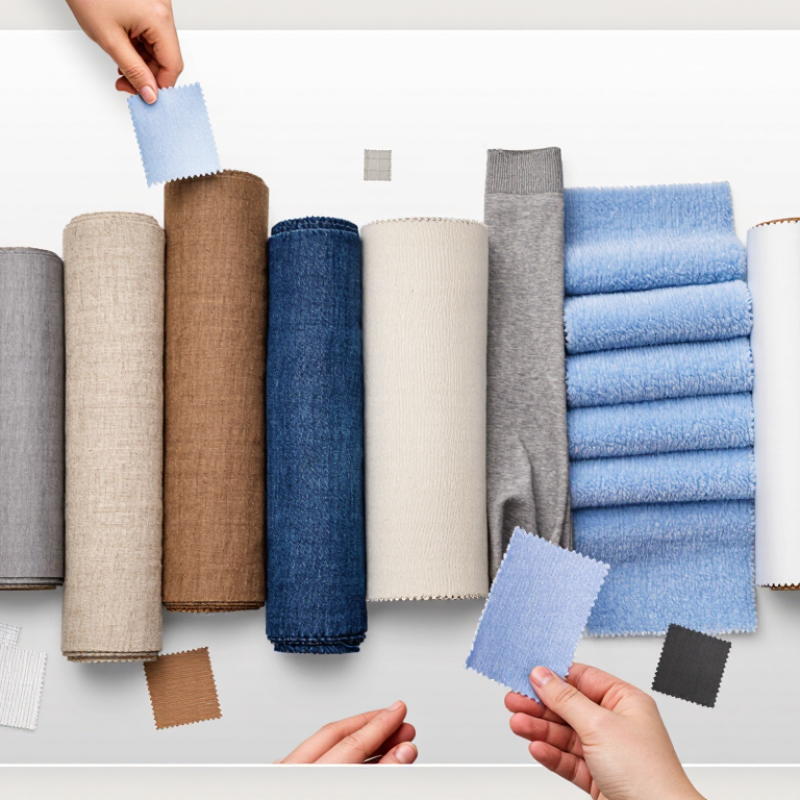
For global buyers, fabric classification works best as a set of clear, comparable details. A supplier may describe cloth by fiber, construction, weight, finish, or intended use. These categories answer different questions. Fiber identifies materials such as cotton, polyester, or blends; construction distinguishes woven, knitted, and nonwoven fabrics. Weight, often stated in grams per square metre, helps buyers compare samples intended for similar applications. That matters. Two fabrics with the same fiber content can feel very different when one is tightly woven and the other loosely knitted.
Finishes add another layer: brushed surfaces feel soft, while water-repellent treatments change how a fabric performs. Buyers should also record usable width, color, and care requirements, then compare them against a physical swatch and the supplier’s specification sheet. A roll edge can reveal construction, but it cannot confirm every performance claim. Not always. Terms may vary between suppliers and markets, so a category name alone is rarely enough. For a reliable comparison, request consistent units and clarify how each figure was measured. Classification is useful, but it is not perfectly tidy; blended fibers and multi-step finishes can fit more than one description.
Synthetic Trade Fabrics: Polyester, Nylon, and Acrylic
Synthetic Trade Fabrics: Polyester, Nylon, and Acrylic
Synthetic fabrics dominate many trade applications because they offer consistent supply, adaptable performance, and controllable cost. Textile Exchange’s Materials Market Report 2024 estimates that global fiber production reached 124 million tonnes in 2023; polyester made up about 57 percent. That scale can support large, repeat orders. Polyester suits banners, workwear, and upholstery where quick drying and wrinkle resistance matter. Yet “polyester” alone says little about performance. Buyers should check filament or staple construction, fabric weight, weave, and any coating. A sample under real lighting helps reveal sheen and color differences. Small specs matter.
Nylon is often selected for luggage, protective covers, and other goods exposed to abrasion; it is strong and resilient, but can cost more than polyester. Acrylic offers a wool-like feel and good color retention, making it useful for outdoor furnishings and knitted goods. Its tendency to pill deserves attention. There is no universal winner. I would not treat a supplier’s fiber label as proof of suitability: request test results for strength, colorfastness, and dimensional change under relevant conditions. For recycled-content claims, ask for traceable documentation. One detail is easy to miss: finishes and fabric construction can change performance as much as fiber choice.
Top 10 Types of Trade Fabrics for Global Buyers
Synthetic Trade Fabrics: Polyester, Nylon, and Acrylic
Typical moisture regain under standard textile testing conditions: nylon absorbs more moisture than acrylic and polyester. Values are approximate and can vary with fiber type, processing, and test conditions.
Regenerated Fabrics and Blends: Rayon, Viscose, and Mixed Fibers
Rayon and viscose are regenerated cellulosic fibers, valued for soft hand, fluid drape, and comfortable wear. In some markets, “rayon” is used broadly, while “viscose” identifies a common fiber type. Buyers should specify the exact fiber name and blend percentage. Labels can be confusing. A fabric that looks similar on a swatch may behave differently after washing.
The scale is substantial. Textile Exchange’s Materials Market Report 2024 estimates global fiber production reached 124 million tonnes in 2023. Its 2022 report puts man-made cellulosic fiber production at about 7.2 million tonnes in 2021. These figures show why regenerated fibers matter in sourcing, but volume alone says little about a fabric’s origin or performance. Ask suppliers for feedstock details and relevant production documentation.
Blends make the trade-offs tangible. Viscose with cotton can add drape to a crisp shirt fabric; with polyester, it may improve softness while changing drying time and pilling behavior. Test the actual construction, not just the fiber recipe. Check weight, width, shrinkage, color variation, and strength after laundering. Conventional viscose can lose strength when wet. That matters. A rushed approval based on one small swatch can miss problems across a full production lot, and even careful specifications do not remove every uncertainty.
How Buyers Compare Fabric Quality, Cost, and Supply Availability
Global buyers rarely choose fabric by fiber name alone. Cotton, polyester, linen, denim, fleece, canvas, satin, jersey, nonwoven, and blended fabrics vary in performance and price. Compare GSM, usable width, yarn count, weave consistency, and finish against the product’s needs. For shirts, check hand feel and shrinkage after washing; for workwear, inspect abrasion resistance and seam strength. Samples can mislead. A swatch may feel excellent, while a full roll reveals slubs, shade shifts, or uneven coating.
Quality requires measurable checks, not vague claims. Request a specification sheet and relevant test results for colorfastness, dimensional change, pilling, and tear strength. Confirm test methods and acceptable tolerances before bulk production. A higher price may still be economical if it reduces cutting waste, returns, or rework. Compare cost per usable meter, not only the quoted price. Include freight, duties, packaging, inspection, and payment terms in the calculation.
Availability matters as much as quality. Ask whether the quoted lot is in stock, made to order, or dependent on seasonal fiber supply. Confirm minimum order quantity, dye-lot repeatability, monthly capacity, and realistic lead times in writing. Check the roll. Keep an approved sample and a small reference swatch from each shipment. Suppliers may offer optimistic dates, while buyers can underestimate delays from color approval or port congestion. Build a buffer and review actual delivery records before placing larger repeat orders.