Choosing among China’s top contract upholstery fabric suppliers takes more than comparing colors and prices. Commercial fabrics must withstand daily friction, cleaning routines, sunlight, and years of use. A chair beside a hotel lift faces different demands from a lounge seat in a quiet office.
Grand View Research’s Upholstery Fabric Market report examines the sector by material, application, and region, offering useful context for buyers assessing supply options. The Association for Contract Textiles (ACT) also provides performance guidance covering factors such as abrasion, seam strength, and colorfastness. These references help frame supplier questions, but they do not certify every product or replace project-specific testing.
William Morris, the British textile designer, offered a fitting principle: “Have nothing in your houses that you do not know to be useful, or believe to be beautiful.” For contract upholstery fabric, both sides matter. Ask suppliers for current test documentation, composition details, available widths, lead times, and evidence of consistent production. Request a sample, too. Rub it. Inspect its backing and edges.
A polished swatch can hide practical weaknesses. And a familiar brand is not automatically the best fit.
The supplier list that follows is a starting point, not a universal ranking. Project needs vary, and published specifications can change. Verify each detail directly before ordering.

Contract upholstery fabric is specified for furniture used in shared, high-traffic settings, rather than occasional residential use. Think of a hotel lobby sofa rubbed by coat sleeves, wheeled bags, and daily cleaning. Offices, restaurants, healthcare spaces, schools, and transport interiors also rely on it. The fabric may use woven polyester, nylon, wool, or blends, but fiber content alone does not determine suitability. Buyers should review abrasion-test results, seam strength, pilling, colorfastness, and cleaning instructions together. ASTM D4157 and D4966 describe common abrasion-testing methods; neither test alone predicts every real-world failure. A high rub count is not the whole story. A tight weave can still snag, fade, or feel uncomfortable.
Durability also affects material waste. The U.S. Environmental Protection Agency’s 2018 Advancing Sustainable Materials Management report estimates that textiles made up 17 million tons, or 5.8%, of U.S. municipal solid waste. This figure covers textiles broadly, not upholstery alone, but it highlights why service life matters. For a contract project, request the test method and result, not just “heavy duty” on a specification sheet. Check whether the fabric suits the actual cleaning routine and expected traffic. Small swatches help assess color and texture, though they cannot show long-term wear. Even careful selection involves trade-offs. A stain-resistant finish may simplify cleaning, but the project team should confirm its care limits before specifying it.
China Top 10 Contract Upholstery Fabric Suppliers?
How China’s Contract Upholstery Fabric Industry Is Organized
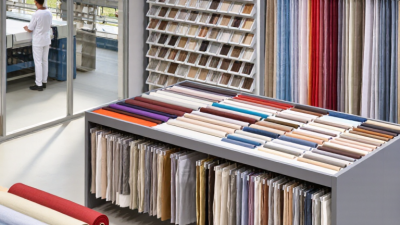
China’s contract upholstery supply chain is usually divided by capability, not simply by supplier rank. Fiber and yarn producers feed weaving or knitting mills. Greige fabric then moves to dyeing, printing, coating, lamination, and finishing plants. Converters and export agents may coordinate testing, packing, and shipment. One supplier may control several steps; another may outsource finishing. The map is efficient, but not always transparent.
The China National Textile and Apparel Council’s 2023 industry review reported about RMB 4.7 trillion in operating revenue for above-scale textile enterprises. This covers the wider textile industry, not upholstery alone. It is useful context, not proof of contract-fabric capacity. Buyers typically compare abrasion results, seam slippage, colorfastness, cleaning performance, and batch consistency. Requirements vary by project and destination. A neat sample is not enough.
Tips: Ask who owns each production step. Request recent test reports, a production-lot sample, and written confirmation of the fabric construction. Check whether the mill can repeat the same shade across separate dye lots. A low quotation may exclude backing, inspection, or testing. That detail is easy to miss.
| Supplier Profile | Common Manufacturing Cluster | Typical Contract Fabric Focus | Role in the Supply Chain | Key Qualification Checks |
|---|---|---|---|---|
| 1. Woven upholstery mill | Textile-producing areas of Zhejiang and Jiangsu | Woven polyester, blended, jacquard, and textured upholstery fabrics | Develops and weaves fabric; may coordinate dyeing and finishing through partner facilities. | Confirm construction, usable width, shade consistency, abrasion results, and repeatability between production lots. |
| 2. Warp-knitting specialist | Haining and nearby Zhejiang textile clusters | Warp-knitted velvet, plush, and other pile or textured fabrics | Supplies soft-surface fabrics commonly used for seating and decorative upholstery. | Check pile direction, pile retention, seam behavior, backing, colorfastness, and abrasion performance. |
| 3. Jacquard and dobby fabric producer | Keqiao/Shaoxing and other Zhejiang weaving centers | Patterned woven fabrics for commercial interiors and furniture | Provides design-led constructions; complex patterns may require longer sampling and production planning. | Approve a production-representative sample; verify pattern repeat, color matching, and lot-to-lot control. |
| 4. Synthetic-leather producer | Manufacturing bases in Zhejiang, Jiangsu, and Guangdong | PVC- or polyurethane-coated upholstery materials | Produces coated surfaces used where cleanability or a leather-like appearance is required. | Specify coating type and thickness; assess hydrolysis, flexing, adhesion, cleaning compatibility, and applicable fire requirements. |
| 5. Recycled-fiber fabric specialist | Major polyester and textile-processing regions, including Zhejiang and Jiangsu | Polyester upholstery fabrics incorporating recycled content | Sources recycled yarn or fiber and converts it into woven or knitted upholstery fabric. | Request transaction-specific recycled-content documentation and verify the scope of any certification independently. |
| 6. Solution-dyed and colorfastness-focused supplier | Polyester textile manufacturing clusters across eastern China | Fabrics designed for demanding color-retention or higher-UV-exposure applications | Offers selected yarns or constructions intended to improve color consistency and performance. | Review test method, exposure conditions, color-change results, and whether testing represents the final fabric. |
| 7. Performance-finishing specialist | Finishing facilities serving textile clusters in Zhejiang and Jiangsu | Upholstery fabrics with specified stain-release, water-repellent, or other finishes | Applies finishing processes, often as a mill or subcontracting partner rather than the original fabric maker. | Confirm finish durability, care instructions, chemical compliance, and performance after the agreed cleaning cycle. |
| 8. Fire-performance project supplier | Suppliers and converters serving domestic and export contract projects | Fabric constructions or treatments specified for particular project fire tests | Coordinates fabric selection, treatment, and test documentation for a stated end-use and destination market. | Match the test report to the exact fabric, backing, treatment, and end-use assembly; requirements vary by market and application. |
| 9. Integrated fabric converter | Textile trading and processing hubs, especially Keqiao/Shaoxing | Multiple constructions sourced from mills and finished to a buyer’s specification | Combines sourcing, dyeing or finishing coordination, inspection, and export handling. | Identify the actual mill and processing sites; define responsibility for quality claims, traceability, and production changes. |
| 10. Export-oriented upholstery supplier | Coastal manufacturing and export hubs, including Zhejiang, Jiangsu, and Guangdong | Project-specific fabric programs, sampling, and shipment coordination | Connects overseas buyers with mills, converters, testing laboratories, and logistics providers. | Check sample-to-bulk approval, inspection criteria, lead-time assumptions, documentation, and written change-control procedures. |
| This is a sourcing map of supplier profiles, not a verified ranking of ten named companies. China’s contract upholstery supply chain commonly separates yarn or fiber sourcing, weaving or knitting, dyeing and finishing, testing, conversion, and export services. Buyers should specify the applicable performance requirements for the destination market and end use. Commonly referenced test methods include ISO 12947 for Martindale abrasion and ISO 105-X12 for rubbing colorfastness; test selection and acceptance limits should be agreed for each project. | ||||
When comparing China’s top 10 contract upholstery fabric suppliers, assess evidence, not catalogue language. Textile Exchange’s 2024 Materials Market Report estimates global fiber production reached 124 million tonnes in 2023, with polyester representing 57%. That scale makes fiber traceability and recycled-content documentation important comparison points. Ask for composition records, batch identification, and current test reports. A certificate without a matching fabric code is weak evidence.
Compare abrasion resistance, seam slippage, pilling, and colorfastness against the project’s actual use. A hotel lobby chair needs different testing priorities from a lightly used meeting-room seat. Check whether reported results follow recognized test methods, and confirm any fire-performance requirements for the destination market. Review minimum order quantities, lead times, repeat-dye consistency, and how defects are handled. Small details matter: inspect the fabric back, selvage, and shade under warm and daylight lighting. Look closely.
A sample can feel excellent yet fail after cleaning or repeated use, so request care instructions and test a production-representative swatch. One weakness in many supplier comparisons is treating a single sample as proof of factory-wide consistency. It is not. Ask how inspection records link to each shipment, and compare answers in writing; response quality is useful, but it cannot replace independent test evidence.
A practical specification check when comparing contract fabric suppliers
ACT performance guidelines cite 30,000 Wyzenbeek double rubs or 40,000 Martindale cycles for high-traffic upholstery. These are separate test methods, and their results are not directly comparable. Confirm the test method, fabric construction, and intended use when reviewing supplier test reports; these benchmarks are guidance, not a universal regulatory requirement.
Source: Association for Contract Textiles (ACT), Upholstery Fabric Performance Guidelines.
For buyers comparing Chinese contract-upholstery suppliers, useful profiles focus on production strengths, not catalogue photos. Textile Exchange’s Materials Market Report 2024 estimates global fibre production reached 124 million tonnes in 2023, with polyester accounting for about 57%. That scale helps explain why polyester-based fabrics are common, but fibre content alone does not prove suitability for hotels, offices, or public seating.
A ten-profile shortlist might include woven-polyester mills, solution-dyed outdoor specialists, jacquard makers, velvet producers, recycled-fibre developers, coated-textile manufacturers, performance-finish teams, high-abrasion fabric makers, custom-colour converters, and vertically integrated mills. Compare each on usable width, colour consistency, minimum order quantity, sampling speed, and documented test results. A swatch can still mislead. Lighting changes the colour, and a small sample rarely reveals how a fabric drapes over a curved seat.
Tips: Request reports for abrasion, pilling, colourfastness, and seam slippage, and confirm the test methods used. Ask for samples from the production lot, not only showroom stock. Check how the supplier handles repeat orders; a good first batch is not the whole story.
Choosing among China’s contract upholstery fabric suppliers starts with verifying what the sample actually represents. Request the factory’s legal business details, production address, and a recent audit scope. Confirm that the audited site will make your order, not merely coordinate it. Ask for the fiber composition, yarn and dyeing records, and batch-level traceability.
Textile Exchange’s 2024 Materials Market Report estimates global fiber production reached 124 million tonnes in 2023. That scale makes clear fiber origin and chain-of-custody records increasingly important. Paper is not proof. Match certificates and invoices to the exact fabric construction and production site.
Order a pre-production sample, then test the bulk lot against written specifications. For upholstery, consider abrasion, pilling, colorfastness to rubbing, and seam performance; set limits for the intended use rather than relying on a generic “commercial grade” claim. ISO 12947 provides Martindale abrasion test methods, but a passing result alone cannot predict every customer’s conditions. Request reports from an accredited laboratory, check test dates, and confirm the tested fabric matches your sample. Inspect rolls for shade variation, defects, width, and usable length when they arrive. Keep a sealed reference swatch. It sounds fussy, but disputes often start with two people describing different shades as “close enough.” A factory visit helps, though one visit cannot guarantee every future batch.