7 Tips for Choosing Freeze Dried Raw Dog Food
Choosing Freeze Dried Raw Dog Food can feel simple until every label raises another question. The package may show fresh-looking meat, colorful vegetables, and confident health claims. However, attractive marketing does not prove complete nutrition or safe handling. Freeze-drying removes moisture, but it does not make raw ingredients completely sterile. That distinction matters.
A trustworthy choice starts with evidence. Look for clear ingredient amounts, feeding directions, batch information, and a nutritional adequacy statement for your dog’s life stage. Check whether the formula follows recognized nutritional standards. Veterinary guidance becomes especially important for puppies, senior dogs, pregnant dogs, and pets with kidney, digestive, or immune concerns. A product may suit one dog and fail another.
Real-world details matter, too. Tiny crumbs can scatter across a kitchen counter. A forgotten opened bag can lose freshness. Rehydrated food can spoil quickly if it sits beside the bowl for hours. These ordinary moments often reveal more than polished advertising. Seven practical tips can help you examine sourcing, nutrition, safety, storage, serving size, and your dog’s response. Watch the stool, appetite, energy, and skin after a gradual change. Not every problem comes from the food, though. Stress, treats, illness, or inaccurate portions may also play a role. Be willing to reconsider the choice. The best decision is careful, evidence-based, and suited to the individual dog.
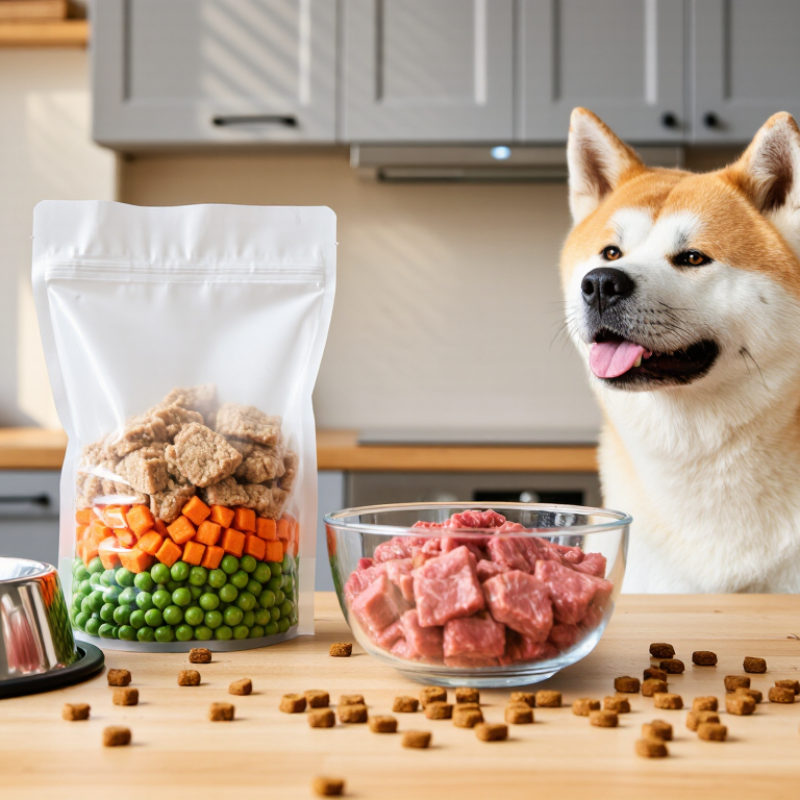
Understanding Freeze-Dried Raw Dog Food and Its Benefits
Understanding Freeze-Dried Raw Dog Food and Its Benefits
Freeze-dried raw dog food removes moisture through low-temperature processing. It becomes light, shelf-stable, and easy to portion. Some owners appreciate the meat-like smell and crunchy texture. Nutrients may be preserved better than with intense cooking, but freeze-drying is not sterilization. The U.S. Food and Drug Administration tested 196 raw pet-food samples in 2014. Salmonella appeared in 15 samples, while Listeria appeared in 32. That detail matters. A safer-looking package can still carry pathogens.
Tip: Check for an AAFCO nutritional adequacy statement. A complete diet should match your dog’s life stage, not merely list attractive ingredients. Choose sealed packaging, clear feeding directions, and a reliable lot number. Store portions as instructed, wash bowls, and keep raw food away from children. Thaw it in the refrigerator, never on the counter. Discard leftovers promptly.
Tip: Measure carefully. Freeze-dried food is concentrated, so a small scoop can contain substantial calories. Your veterinarian can assess body condition, stool changes, allergies, and medical risks. The World Small Animal Veterinary Association reports no proven general health advantage for raw diets over balanced cooked diets. That is easy to overlook. I like the convenience, but convenience is not evidence. Introduce the food gradually, observe your dog’s digestion, and reconsider the choice if vomiting, diarrhea, or weight changes appear.
Matching the Formula to Your Dog’s Age, Size, and Health Needs
Choosing Freeze Dried Raw Dog Food for Age, Size, and Health
Match the recipe to your dog’s life stage, not your preferences. Puppies need growth-supporting nutrients, while seniors may need fewer calories and easier digestion. Check the label for a complete and balanced nutritional profile. A shiny ingredient list is not enough. Feeding trials or recognized nutritional standards offer stronger evidence.
Consider body size carefully. Small dogs often need calorie-dense meals in tiny portions, while large dogs may benefit from controlled calories and joint-supportive nutrients. Weigh portions with a kitchen scale. Guessing can quietly cause weight gain. For sensitive stomachs, choose a simple protein formula and change foods gradually over seven to ten days. I would still question every “limited ingredient” claim. Limited does not always mean suitable.
Health conditions require professional guidance. Dogs with kidney, liver, pancreatic, or urinary problems may need carefully controlled nutrients. Ask your veterinarian before using raw food for a medically vulnerable dog. Freeze drying reduces moisture, but it does not make handling risk-free. Wash hands, clean bowls, and store the food as directed. Keep it away from children and immunocompromised household members. Observe stool quality, energy, coat condition, and body weight for several weeks. No formula is perfect. Your dog’s response matters, and the plan may need revision.
Evaluating Safety, Processing Standards, and Storage Requirements
7 Tips for Choosing Freeze Dried Raw Dog Food
Safety begins with realistic expectations. Freeze-drying removes moisture, but it does not reliably destroy every pathogen. The FDA tested 196 raw pet food samples and found Salmonella in 7.7% and Listeria monocytogenes in 16.3% of samples (FDA, 2015). Tip 1: Treat “raw” as microbiologically active. Tip 2: Choose products with documented pathogen testing, lot numbers, and clear recall procedures. Tip 3: Ask whether the facility follows HACCP-based controls and recognized animal-food manufacturing standards. A polished label is not proof.
Processing details matter. Tip 4: Look for a clearly described process, not vague claims about “natural purity.” Tip 5: Check whether nutritional adequacy is confirmed by feeding trials or formulation analysis, consistent with AAFCO guidance. Tip 6: Review the protein source, calorie density, and mineral balance with a veterinarian, especially for puppies or dogs with kidney concerns. I would not trust a certificate alone. Testing can miss contamination between production and delivery.
Storage requires discipline. Tip 7: Keep unopened bags sealed in a cool, dry cupboard, away from sunlight and cleaning chemicals. Use clean, dry scoops. After rehydration, refrigerate the food promptly and follow the manufacturer’s use window. Discard leftovers that sat beside a warm bowl for hours. Wash hands, bowls, and preparation surfaces with hot, soapy water; CDC guidance highlights these steps for reducing raw-food exposure. Small mistakes happen. Repeated mistakes are different.
Comparing Feeding Costs, Brand Transparency, and Customer Support
Choosing freeze-dried raw dog food requires more than comparing the price on one bag. I calculate the cost per prepared meal after adding water, because a lightweight package can look cheaper than it really is. I also compare feeding directions, calorie density, and my dog’s weight. A higher price may be reasonable if the food provides complete and balanced nutrition. Still, expensive does not automatically mean better.
Brand transparency deserves close attention. I look for clearly listed animal proteins, organs, vegetables, minerals, and calorie content. Vague terms raise questions. Reliable companies explain ingredient sourcing, manufacturing controls, and independent testing. They should also provide a nutritional adequacy statement and clear storage instructions. Batch information matters when freshness or quality needs checking. I once overlooked serving differences between two packages, which made my first cost comparison inaccurate. That mistake still influences how I shop.
Customer support can reveal practical reliability. Before buying, I send specific questions about transition schedules, storage after opening, and nutrient testing. A knowledgeable response should be detailed, timely, and free from exaggerated promises. Ask whether a veterinary nutrition professional helps formulate the recipes. Notice how representatives handle criticism, too. Good support does not pressure you to purchase. It helps you make a safer feeding decision. Keep receipts and note your dog’s stool, appetite, coat, and energy during the transition. Small observations matter.
Estimated Freeze-Dried Raw Dog Food Cost by Dog Size
Estimated monthly feeding costs are calculated for adult dogs using a maintenance-energy formula, an average freeze-dried food energy density of 140 kcal per ounce, and three anonymized price levels: value ($2.00/oz), mid-range ($2.75/oz), and premium ($3.50/oz). Actual costs vary with activity, calorie density, package size, and feeding instructions.
For transparent comparisons, check whether each product lists calories per ounce, complete-and-balanced nutritional adequacy, feeding guidelines, lot information, and accessible customer support.
