How to Choose a NIJ Level III Bulletproof Plate?

Choosing a Nij Level3 Bulletproof Plate is not a matter of picking the thickest panel. It means weighing verified ballistic performance, fit, weight, and how the plate will be worn. Standards matter. The National Institute of Justice’s NIJ Standard-0101.06 defines the older Type III test category, while NIJ Standard-0101.07, published in 2023, uses updated rifle-threat categories. These versions are not interchangeable labels. A buyer should check the exact standard and threat rating shown in a manufacturer’s documentation.

NIJ’s Compliance Testing Program (CTP) provides a useful verification point: check whether the specific model appears on its Compliant Products List, rather than relying on a logo or a sales claim. Then read the test details. Confirm whether the plate is standalone or requires a compatible soft-armor vest, and compare its declared dimensions and weight with the intended carrier. A plate that feels manageable on a shop counter may feel very different after several hours. Fit is practical, not cosmetic. This guide uses NIJ standards and CTP resources as its reference points, but those sources cannot tell you whether a particular plate suits every wearer or situation. That judgment takes care—and, honestly, can be harder than the product page suggests. Before choosing, verify current documentation and consider advice from a qualified armor professional.
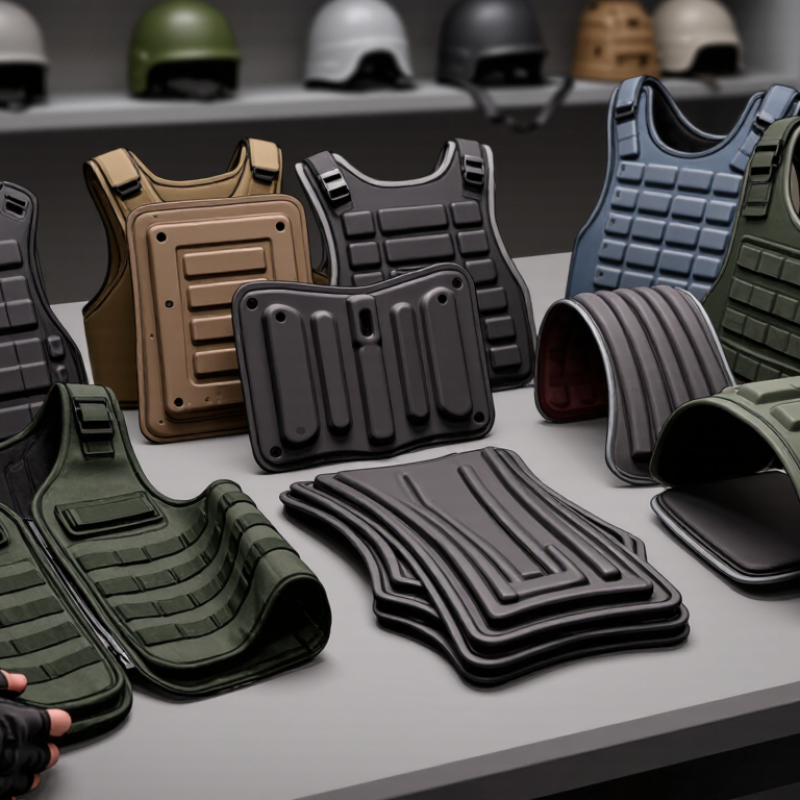
How to Choose a NIJ Level III Bulletproof Plate?

Understand What the NIJ Level III Rating Covers

A NIJ Level III rating refers to a defined test, not protection against every rifle round. Under NIJ Standard-0101.06, compliant armor is tested with six 7.62×51 mm M80 ball rounds, typically 147 grains, at approximately 2,780 feet per second. The report also evaluates penetration and backface deformation in calibrated clay; the permitted deformation is no more than 44 mm. These figures come from the National Institute of Justice’s test standard, not a guarantee of identical results in every real-world impact. Not every 7.62 mm load is M80.

Check the exact model and test edition. NIJ 0101.06 uses the Level III label, while the newer 0101.07 standard uses rifle-threat categories such as RF1 and RF2. That distinction is easy to miss. A plate may be tested as standalone or only when worn with specified soft armor, so read its label and test documentation carefully. Match the listed configuration to how the plate will be worn. Fit matters too: an edge sitting outside the torso leaves an uncovered area, even if the plate passed testing. Standards cannot predict every angle, impact location, or condition. I would verify the exact listing rather than trust a product description alone.

Identify the Threats the Plate Needs to Address

Before choosing a NIJ Level III plate, define the rifle threats it must address. Consider the ammunition type, likely distance, and whether repeated impacts are a concern. A level label is not a universal promise. Real-world ammunition varies.

NIJ Standard-0101.06 specifies Level III testing with 7.62×51 mm M80 full metal jacket ammunition at 2,780 ft/s (847 m/s). That test does not automatically establish protection against every 5.56 mm or 7.62×39 mm load. The distinction matters. NIJ 0101.07 and its associated 0123.00 threat tables identify specific rifle threats across RF levels. Compare the listed projectile types and test velocities with the threats you actually expect.

Check the exact plate model and configuration against NIJ’s Compliant Products List, rather than relying on a seller’s general description. Ask for test details, including shot count and backface deformation results. Those details can change how a rating applies to your needs. Your threat estimate may be imperfect; write down what is known, note what is uncertain, and reassess when better information becomes available.

Compare Plate Materials, Weight, and Coverage

Choosing a NIJ Level III plate means comparing material, weight, and coverage—not just the label. NIJ Standard 0101.06 lists a Level III test threat of 7.62 mm M80 ammunition, 147 grains, at 2,780 feet per second. Its protocol includes six impacts. Check the exact standard and test documentation: “Level III” alone does not tell you how a plate performs against every rifle threat. Ceramic plates can offer a lighter option, while steel and polyethylene designs differ in thickness, weight, and impact behavior. Construction varies. Compare published weight per plate, not a vague “lightweight” claim.

Coverage is a fit decision. A larger plate protects more of the torso but can restrict bending, reaching, or sitting in a vehicle. Measure your chest and shoulder-to-waist area, then check the plate dimensions against your movement and carrier. NIJ’s 0101.06 test requirements also specify conditioning before ballistic testing, so ask whether published results reflect the complete test—not just a single impact. I still find fit easy to underestimate. A plate that shifts when you raise your arms may leave gaps where you expected protection. Compare independent test reports, edge-to-edge dimensions, thickness, and weight together; none of these figures tells the whole story.

How to Choose a NIJ Level III Bulletproof Plate?

Compare representative plate-weight ranges by material for a nominal 10 × 12 in plate.

Approximate ranges are illustrative, not NIJ specifications; actual weight varies with model, construction, and cut. A nominal 10 × 12 in plate has a 120 sq in rectangular footprint, but its shape and cut affect usable coverage. NIJ Level III performance applies to the tested plate model and configuration—not to a material by itself. Check the current NIJ-compliant product listing and fit before purchasing.

Check Fit, Carrier Compatibility, and Wearability

A NIJ Level III plate should fit your torso without restricting ordinary movement. Check the plate’s dimensions against the carrier’s stated size range; a small gap or forced fit can cause shifting. Compare the plate shape with your chest, and follow the maker’s placement guidance. The upper edge should sit comfortably near the collarbone, not press into your throat. Verify the exact plate model’s testing information, too. Fit alone does not confirm performance.

Carrier compatibility matters. Check whether the carrier supports the plate’s size, thickness, shape, and weight. Insert the plate as directed, then fasten the carrier and move naturally: reach forward, sit, and bend. Notice pressure points around the shoulders and ribs. A plate can fit on paper and still feel wrong after ten minutes. That is worth reconsidering. Choose a setup you can wear securely, without constant adjustment, and inspect the carrier and plate for damage before use.

Tips: Wear the loaded carrier briefly at home, over the clothing you expect to use. Check for slipping, pinching, or restricted breathing. Small details matter. If sizing remains uncertain, consult the plate and carrier manufacturers’ fit guidance rather than guessing.

How to Choose a NIJ Level III Bulletproof Plate? — Check Fit, Carrier Compatibility, and Wearability

What to Check What to Look For Practical Guidance
Protection rating and test standard Confirm the exact model, rating, and applicable NIJ standard; do not rely on a general “Level III” description alone. Under the legacy NIJ 0101.06 standard, Level III testing includes 7.62 mm M80 ball ammunition. A rating does not mean protection against every rifle round. Check the current NIJ Certified Products List and the product’s official documentation.
Threats relevant to your needs Compare the plate’s documented test threats with the ammunition risks you need to address. Do not assume a Level III label covers every 5.56 mm, steel-core, or other specialized projectile. Confirm any additional threat claims from the exact model’s test documentation.
Torso coverage and plate size Choose a size based on your body measurements and the plate maker’s sizing instructions. The plate should cover the intended vital area without extending so far that it significantly restricts movement. A common nominal size, such as 10 × 12 inches, is not a universal fit standard.
Carrier pocket dimensions Check the carrier’s internal pocket width, height, closure, and stated plate-size range. Measure the pocket itself rather than relying only on the carrier’s nominal size. Allow for the plate’s actual dimensions, thickness, and edge shape so it can be inserted and secured properly.
Standalone or in-conjunction-with (ICW) Verify whether the plate is rated for standalone use or requires specified soft armor behind it. An ICW plate must be used with the compatible backing described in its documentation. Do not treat an ICW plate as standalone protection or substitute an unspecified backing layer.
Plate shape and orientation Check for curvature, cut (such as shooter or swimmer), top edge, and any marked strike-face direction. Match the plate’s shape and orientation to the carrier pocket and intended side. A curved plate may sit closer to the body, while a cut or edge shape can affect coverage and shoulder movement.
Weight and balance Review the published weight for each plate and consider the combined weight of both plates, carrier, and other equipment. Plate weight varies by size, construction, and materials. Compare the actual specifications rather than assuming all plates with the same rating weigh the same.
Thickness and comfort Check the plate’s stated thickness and how it sits inside the carrier. Confirm that the plate does not press uncomfortably against the body, interfere with closures, or prevent the carrier from sitting securely. Test comfort while standing, sitting, and moving.
Movement and daily wear Assess shoulder mobility, bending, sitting, and access to necessary equipment while wearing the loaded carrier. Try the carrier with the actual plates and intended load. Adjust the straps so the carrier stays stable without unnecessarily limiting breathing or movement.
Inspection and service life Follow the manufacturer’s instructions for inspection, storage, cleaning, and replacement. Check for damage, deformation, cracked coatings, or other listed warning signs. Do not use a plate that has been dropped, struck, or otherwise damaged unless its maker confirms it remains serviceable.

Important: “Bulletproof” is not an absolute guarantee. Protection depends on the exact plate model, test standard, threat, condition, fit, and—where required—the specified backing armor.

Verify Testing Records, Labels, and Plate Condition

A NIJ Level III label is a starting point, not proof by itself. Match the plate’s exact model and configuration to current NIJ records, where applicable, and review the test documentation. Check who performed the testing, which standard and threat rounds were used, and whether the report covers that specific design. A report for a similar plate may not apply. Look for a legible label showing the model, protection level, serial or lot number, and manufacture date. Small details matter. If numbers differ between the label and paperwork, pause and ask the seller or manufacturer for written clarification. Paperwork can look complete and still leave a gap.

Inspect the plate in good light. Check the cover and edges for cuts, swelling, loose seams, or signs of moisture. For hard armor, look for cracks, chips, or unusual sounds when gently handled; do not strike or bend it to test its strength. A clean surface is reassuring, but it cannot reveal every internal flaw. That part is frustrating. Ask about storage, prior impacts, and the maker’s service-life guidance, then compare the answers with the plate’s date and condition. If its history is unknown, or the label is damaged, treat that uncertainty seriously rather than assuming the plate is safe.