Where to Buy Slim Fit Pique Polo Shirts in Bulk?
Buying a Slim Fit Pique Polo in bulk is not just a price comparison. The right supplier must deliver consistent fit, durable pique fabric, and dependable production across every size. A sample can look sharp under showroom lights, yet feel restrictive after a full workday. Check the collar recovery, placket stitching, fabric weight, and size measurements before approving a large order.
Fashion educator Tim Gunn is known for the advice, “Make it work.” For bulk buyers, that principle means balancing a clean, modern silhouette with practical needs: staff movement, repeat wear, and brand presentation. It is a useful lens, not a sourcing guarantee. Ask suppliers for a current size chart, sample garments, minimum order quantities, customization options, and realistic production timelines. Compare the finished sample with the specifications in writing.
Small details matter. A firm collar should lie flat; the side seams should not twist after washing. Request fabric and color consistency information, especially when ordering multiple batches. Then review the landed cost, including packaging and freight, rather than focusing only on the unit price. There is no perfect checklist. A sample may not predict every production issue, and supplier claims still need verification. That is worth remembering. This guide will help buyers compare wholesale sources for Slim Fit Pique Polo Shirts and ask sharper questions before placing a bulk order.
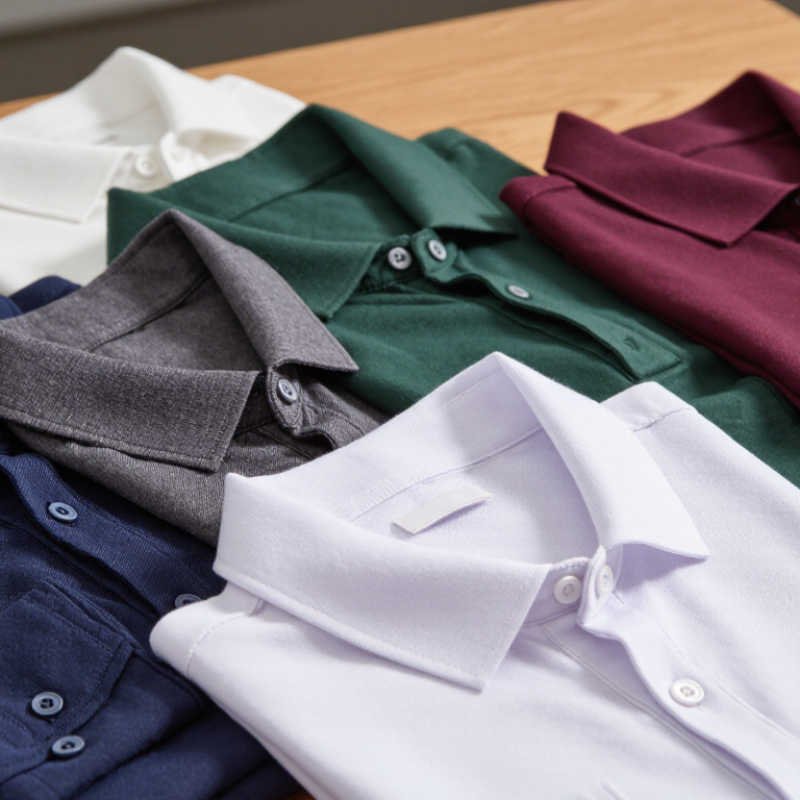
Define Slim-Fit Piqué Specs: 180–220 GSM, Fiber Blend, and Size Range
For bulk orders, define slim-fit piqué by measurable details, not just the word “slim.” A practical fabric target is 180–220 GSM, with the weight tolerance stated on the purchase specification. Ask for a pre-production swatch and confirm whether GSM is measured before or after finishing. Piqué’s raised texture can feel airy, but a heavier knit may feel warm under the collar. Fit changes everything.
Textile Exchange’s 2024 Materials Market Report estimates that global fiber production reached 124 million tonnes in 2023; polyester represented 57% and cotton about 20%. These figures describe market supply, not the best polo blend. For a balanced starting point, compare 100% cotton with a cotton-polyester blend, such as 60/40. Check shrinkage, color change, and surface pilling after washing. A neat spec sheet still cannot promise a perfect hand feel.
Set the size range around actual buyers, such as XS–3XL, then request garment measurements for chest, body length, sleeve, and hem at every size. Ask how the factory grades between sizes, and review a sample on more than one body shape. Slim cuts can bind at the upper arm even when the chest measurement looks right. I would not treat 200 GSM as a magic number; fabric construction and finishing matter too.
Compare Bulk Sources: Textile Mills, Apparel Factories, and Wholesalers
Where to Buy Slim Fit Pique Polo Shirts in Bulk?
Compare Bulk Sources: Textile Mills, Apparel Factories, and Wholesalers
Textile mills are useful when fabric control matters. Ask about pique weight, cotton-polyester blend, dye-lot consistency, and minimum yardage. They usually sell fabric, not finished polos, so you will need a capable cut-and-sew factory. Textile Exchange’s Materials Market Report 2024 estimates global fiber production reached 124 million tonnes in 2023, with polyester representing 57%. That scale shows why fiber availability can be broad, but it does not guarantee a mill can match your color or hand feel. Request a lab dip and fabric swatch.
Apparel factories offer more control over fit, stitching, labels, and packaging. They suit repeat orders, but sample approval and production planning take time. Wholesalers can ship ready-made polos faster, often with lower order thresholds, though size runs and color choices may be limited. Compare landed cost, not just unit price: include freight, duties, inspection, and possible defects. The trade-off is not neat. A low quote can hide a long lead time.
Tips: Send the same tech pack to each supplier. Include a graded size chart, collar dimensions, fabric weight, and acceptable tolerance. Ask for a pre-production sample and confirm replenishment timing in writing. Check several shirts from the sample batch, not just the best-looking one. A small mismatch can still happen.
Check Colorfastness Using ISO 105-X12’s 1–5 Gray-Scale Rating
Where to Buy Slim Fit Pique Polo Shirts in Bulk?
Check Colorfastness Using ISO 105-X12’s 1–5 Gray-Scale Rating
When comparing bulk slim-fit pique polos, ask for colorfastness results alongside fabric weight, fit measurements, and available colors. ISO 105-X12 evaluates color transfer during rubbing. Testing can include dry and wet conditions, which matter for shirts exposed to sweat, rain, or frequent washing. Results are commonly assessed on a 1–5 gray scale: 5 indicates little or no staining on the test cloth, while 1 indicates severe staining. Higher is better. Check that the report states the test condition and rating, not just “passed.”
Request a sample from the same fabric and dye lot planned for production, then review the report before approving a large order. A dark navy polo may look even under showroom lights but transfer color when rubbed against a pale bag or jacket. Ask who conducted the test and when. Also confirm whether the reported result applies to the finished garment or only to fabric swatches. One limitation: a strong rubbing score does not guarantee resistance to fading from sunlight or laundering. Testing helps, but it is not the whole picture.
Tips: Compare wet and dry ratings. Keep the report with your purchase records, and inspect a sample after handling. Small details can be missed.
Compare Supplier Quotes by MOQ, Sample Cost, Lead Time, and Incoterms
When sourcing slim-fit pique polo shirts in bulk, compare more than the unit price. A low quote can hide a high minimum order quantity (MOQ), costly samples, or separately billed freight. Ask each supplier to quote the same fabric weight, fiber blend, size range, and color. Otherwise, the numbers are not comparable. Fit matters. Request a graded size chart and check shoulder width, chest ease, and body length on a physical sample.
Record the MOQ per color and whether sizes can be mixed. Confirm sample cost, shipping charges, and whether the sample fee is credited toward production; policies vary. Split lead time into sample development, revisions, and bulk production. Get the start point in writing, such as final sample approval and deposit receipt. A promised “30 days” is vague. Ask for a calendar estimate and likely delay points, including fabric booking and inspection.
Tips: Compare Incoterms using the exact delivery place and applicable version, such as FCA or FOB at a named port. Clarify who arranges main freight, insurance, export clearance, and unloading. Request a revised quote with every assumption listed. Spreadsheets can miss small charges, so check the pro forma invoice before approval.
Verify OEKO-TEX STANDARD 100 Certification and Fiber-Content Labels
When sourcing slim fit pique polo shirts in bulk, request the OEKO-TEX STANDARD 100 certificate before approving a purchase order. Check its number, validity dates, certificate holder, and product scope. The document should cover the garment or relevant textile components, not merely an unrelated fabric. Confirm that the style and materials you plan to buy fit that scope. A certificate is useful evidence, but it does not guarantee every shipment has identical composition or workmanship.
Read the fiber-content label as carefully as the certificate. Compare the stated percentages with the specification sheet, sample garment, and available test records. For example, a label stating 60% cotton and 40% polyester should match the fabric used in the bulk order. Colors can sometimes use different blends, so check each colorway rather than assuming one label covers all. Small detail, big consequence. Ask how the supplier handles sewn-in labels, hangtags, and any trim that may affect the stated content.
Before confirming quantities, request a pre-production sample and review its label against the paperwork. Keep the approved documents with your order records, then check a few garments from the delivered cartons. That step takes time. It can also reveal a mismatch before the polos reach customers. I would not treat a certificate alone as proof of a perfect order; paperwork and the physical garment need to agree.
