2026 Best Vape Pin Types for Global Buyers

Choosing the right Vape Pin in 2026 is less about appearance and more about fit, materials, and consistent performance. A pin may look polished in a product photo, yet small differences in dimensions or finish can affect how it fits its intended assembly. Global buyers also need clear specifications, traceable quality checks, and reliable supplier communication. These details matter more than a bold catalog claim.

This guide compares common Vape Pin types by their practical features, including connection style, material, tolerances, and compatibility. It also considers questions buyers can ask before placing an order: Are dimensions documented? Is the finish consistent across samples? Can the supplier explain its inspection process? Small details count. A pin that feels smooth in the hand is not necessarily a well-matched component. That distinction deserves attention.

For context, tobacco researcher Dr. Konstantinos Farsalinos is known for evidence-focused work on vaping products. No verified, topic-specific quotation from him about Vape Pin selection was provided, so this introduction does not invent one. That may feel less polished, but accuracy matters. The comparisons ahead aim to help readers assess product information carefully, identify useful questions, and avoid relying on appearance alone. Each application is different; a concise checklist can help, but it cannot replace checking the relevant specifications with a qualified supplier.
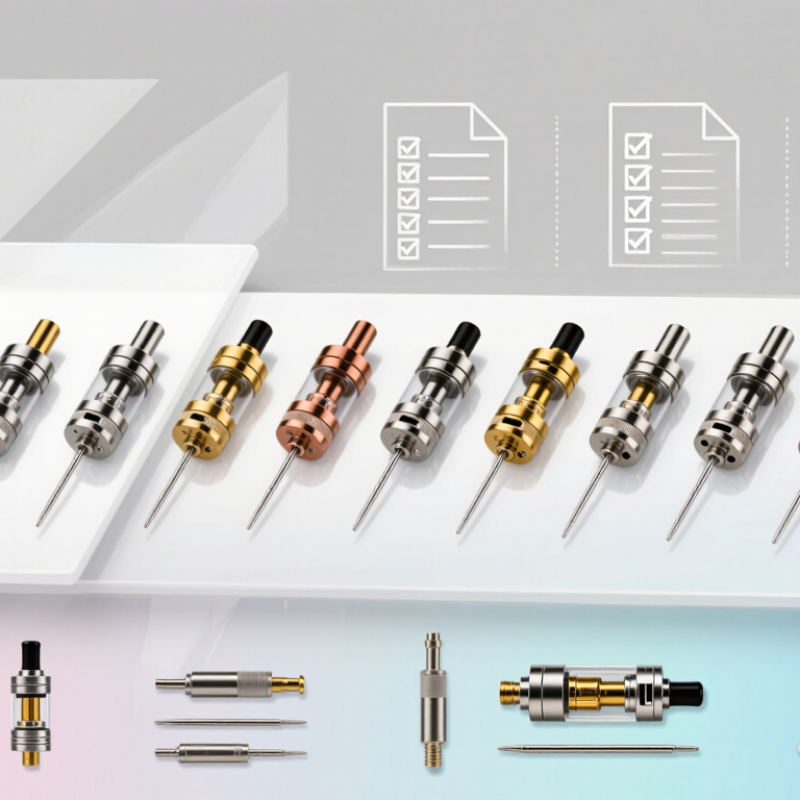
2026 Best Vape Pin Types for Global Buyers

What Vape Pins Are and How They Connect to Devices

A vape pin is the conductive contact that carries power between a device and its replaceable component. In a common threaded connection, the center pin forms one electrical contact, while the surrounding metal body forms the other. Spring-loaded pins can move slightly, helping maintain contact when parts vary in length. Small parts matter.

Contact style affects fit, current flow, and maintenance. Threaded pins provide mechanical support, but cross-threading or residue can interrupt contact. Spring-loaded contacts tolerate small gaps, yet can stick or wear. Magnetic contacts connect quickly, though alignment and secure retention need careful checking. Not interchangeable. A pin that looks similar may have different spacing, polarity, or travel.

Standards help explain why inspection matters. The IEC 60512 connector-test series includes methods for checking contact resistance and mechanical endurance. USB-IF’s Type-C connector specification defines 24 contacts, showing how detailed modern connection design can be; this is a comparison, not a vape-pin requirement. For buyers, request dimensioned drawings, plating details, and test conditions rather than relying on photos alone. I would not treat a larger pin as automatically better. Real performance depends on contact pressure, material, cleanliness, and the device’s electrical design. A small caveat: supplier test results can vary with the fixture and method used.

Common Vape Pin Types and Their Design Differences

Common vape pin arrangements differ in how they align, carry current, and handle wear. A 510 threaded connection uses a central contact and an outer threaded return. It offers familiar mechanical engagement, but mismatched thread depth can leave the center pin poorly seated. Magnetic connectors join through face contacts and magnets, making attachment quick. Their weak point is alignment: residue or a slightly shifted adapter can interrupt contact.

Spring-loaded pins use a small internal spring to maintain pressure as parts move. They can tolerate minor height variation, though repeated compression may reduce contact reliability. Proprietary pins use custom shapes or spacing, so replacement parts may not fit other devices. Check pin height, diameter, insulation, and contact finish against the device drawing. Small differences matter.

Market context helps explain why buyers compare compatibility closely. Grand View Research’s 2024 e-cigarette and vape market report estimated the 2023 market at USD 28.17 billion. That figure measures the wider market, not pin demand. A market estimate cannot confirm connector quality. In practical sourcing, ask for dimensional drawings and test samples, then inspect contact pressure and surface wear. A clean sample can still hide inconsistent production. Fit matters.

2026 Best Vape Pin Types for Global Buyers - Common Vape Pin Types and Their Design Differences

Pin or Contact Type Typical Design How It Connects Common Advantages Key Limitations Buyer Checks
Fixed 510 center pin A central conductive contact sits inside a threaded 510 connector. The pin is fixed rather than spring-loaded. The atomizer or tank screws onto a compatible 510 connection; the center pin carries the electrical contact. Widely used across compatible vape batteries, mods, tanks, and atomizers. The threaded connection provides mechanical retention. Fit can vary between products. A fixed pin may not make reliable contact with every device if contact heights differ. Confirm 510 compatibility, thread condition, center-pin alignment, and whether the product requires a particular contact height.
Spring-loaded 510 center pin A movable center contact uses a spring to provide limited travel when a compatible atomizer is attached. The threaded 510 interface secures the components, while the spring-loaded contact accommodates some variation in contact height. Can help maintain electrical contact across compatible components and reduce the need for manual pin adjustment. Travel is limited; it does not make incompatible thread sizes or connector designs interchangeable. Springs and moving parts can wear or collect residue. Check pin travel, smooth return, cleanliness, and the device maker’s compatibility guidance. Avoid forcing or manually extending the pin.
Magnetic 510 adapter contacts An adapter combines a 510 connection with magnetic retention and conductive contact surfaces. The adapter screws into a compatible 510 device; magnets help hold a matching cartridge or component in place while contacts complete the circuit. Allows quick attachment and removal with a matching adapter-and-cartridge system. Magnetic systems are not universal. Compatibility depends on the adapter, contact layout, and cartridge; magnets alone do not establish electrical compatibility. Verify the exact adapter and cartridge pairing, contact alignment, polarity requirements where specified, and secure retention.
Spring contacts in pod devices Small spring-loaded contacts, often described as pogo-style contacts, are positioned in the device bay or on a matching pod. Inserting the compatible pod presses the contacts together to create an electrical connection. Supports tool-free pod replacement and can accommodate small variations in contact height within the designed system. Usually part of a device-specific design. E-liquid residue, dust, or worn contacts can interfere with the connection. Check that the pod is designed for the exact device model. Inspect contacts for debris or damage and follow the manufacturer’s cleaning instructions.
Flat or pad-style pod contacts Conductive pads or flat contact surfaces meet corresponding contacts when a compatible pod is seated. The pod’s shape and retention features position its pads against the device contacts. Compact layout can suit enclosed pod designs and does not require a threaded connector. Contact layout and pod dimensions are generally system-specific; similar-looking pods may not be electrically or mechanically compatible. Match the exact device and pod specifications. Check contact placement, seating, and the presence of any required alignment features.
Proprietary multi-contact layouts Two or more contacts may be arranged in a device-specific pattern to support power and, in some systems, additional functions. A matching pod or cartridge aligns with the device’s contact pattern and retention mechanism. Designers can tailor the interface to a particular device format and feature set. Not a universal standard. A different contact pattern or electrical specification can prevent operation or cause incompatibility. Use the manufacturer’s model-specific compatibility information; do not rely on appearance alone when sourcing replacement pods or components.

Selection note: “510” refers to a common threaded connector format, while pod contacts and magnetic adapters often depend on a specific product system. Always confirm mechanical fit and electrical compatibility; connector designs and specifications can vary between manufacturers.

Pin Materials, Dimensions, and Compatibility Factors

2026 Best Vape Pin Types for Global Buyers

Pin Materials, Dimensions, and Compatibility Factors

Pin selection depends on contact material, geometry, and the mating device—not appearance alone. Brass is easy to machine, while copper offers strong electrical conductivity but can oxidize. Stainless steel resists corrosion, though it is less conductive. Plated contacts can help limit surface wear; plating thickness and base metal still matter.

Small differences matter. For many 510-style connections, the commonly listed thread dimensions are 7 mm diameter and 0.5 mm pitch. Treat these as a market convention, not a guarantee of interchangeability. Check the supplier’s drawing, thread depth, center-pin travel, and insulation layout.

Compatibility also depends on contact pressure and resistance. A fixed pin may suit a stable assembly; a spring-loaded pin can accommodate modest length variation, but adds moving parts. IEC 60512-2-1 provides a test method for measuring connector contact resistance, useful when comparing documented samples.

Ask suppliers for resistance results, plating specifications, and dimensional tolerances, then verify them on the intended assembly.

One limitation: a drawing may omit tolerances. Request a complete specification before approving production. A pin that fits the thread may still make poor electrical contact or sit too far inward.

How Regional Standards Affect Global Vape Pin Sourcing

Global vape-pin sourcing depends on more than contact shape. Fixed pins, spring-loaded contacts, and magnetic connections can differ in plating, pressure, and resistance. Regional requirements rarely prescribe one universal pin design. Instead, they affect the materials, testing, and documentation needed for the finished device. Small details matter. A pin that fits a sample may still perform poorly after repeated connection or exposure to moisture.

For lithium-powered products, the UN Manual of Tests and Criteria, 8th revised edition, Section 38.3, specifies eight tests for cells and batteries during transport. These tests apply to the battery, not the pin, but connector design can influence assembly reliability. In the EU, RoHS rules restrict ten substance groups; concentration limits include 0.1% for lead and 0.01% for cadmium in homogeneous materials, subject to applicable exemptions. Ask suppliers for material declarations, plating details, and test records tied to the exact part revision. Requirements can vary by destination and product configuration, so confirm them with qualified compliance staff. I have seen sourcing plans miss this point: paperwork for a similar pin is not proof for the pin being purchased.

2026 Best Vape Pin Types for Global Buyers

How regional standards affect global vape pin sourcing

These regional limits apply to nicotine concentration in vaping products—not to pin dimensions or connector types. Vape pins and cartridge connections are not represented by a single universal regional specification, so buyers should verify mechanical fit, electrical compatibility, and applicable market rules for each product.

Sources: EU Tobacco Products Directive 2014/40/EU, Article 20; UK Tobacco and Related Products Regulations 2016; Canada’s Nicotine Concentration in Vaping Products Regulations. The United States is not shown because there is no single federal numerical nicotine-concentration limit for all vaping products.

What Buyers Should Compare When Selecting Vape Pins in 2026

2026 Best Vape Pin Types for Global Buyers

What Buyers Should Compare When Selecting Vape Pins in 2026

Pin design affects fit, electrical contact, and assembly speed. Threaded contacts provide mechanical retention; spring-loaded pins can accommodate small alignment differences; magnetic contacts make connection easier but require checks for polarity and pull-off force. Grand View Research estimated the global e-cigarette and vape market at USD 28.17 billion in 2023 and forecast 30.6% annual growth from 2024 to 2030. That market estimate signals scale, not proof that any pin design performs better.

Compare base material, plating, contact resistance under load, current rating, operating temperature, and mating-cycle results. Ask how each figure was measured. The IEC 60512 series provides test methods for electrical connectors, useful when reviewing supplier test plans. A specification sheet without test conditions is hard to evaluate. So is an unsupported “long life” claim.

Check pin dimensions and tolerances against the mating part, then request sample testing under expected assembly conditions. Review material declarations, lot traceability, and conformity documents relevant to destination markets. One awkward detail: a bright finish can look reassuring while hiding inconsistent plating thickness. Ask for measured results and batch-level records, not just a polished sample.

Article Source: