2026 Best LED Silicone Face Mask for Global Buyers

Choosing the 2026 Best LED Silicone Face Mask requires more than comparing light colors and attractive packaging. Global buyers need evidence about safety, comfort, performance, and after-sales support. A Led Silicone Face Mask may look advanced, yet its value depends on measured irradiance, wavelength accuracy, treatment guidance, and consistent skin contact.

This guide examines practical details that matter during real use. We consider flexible silicone, adjustable straps, eye protection, charging design, cleaning methods, and session comfort. A lightweight mask should rest evenly across the cheeks and forehead. It should not pinch the nose after ten minutes. Clear instructions matter too, especially for first-time users and international customers.

Product claims deserve careful checking.

We will compare manufacturer data, user feedback, warranty terms, and available compliance information. Requirements can differ between markets, so buyers should verify local regulations and consult qualified professionals when necessary. Results also vary with skin type, routine, and treatment consistency. No device suits everyone.

Some comparisons remain limited. Independent testing is not always available, and marketing language can sound stronger than the evidence. That limitation deserves attention. The best choice may not be the most expensive model. It may be the mask with honest specifications, reliable support, and a comfortable design that encourages regular use. This review aims to help distributors, retailers, clinics, and individual buyers make a more informed decision in 2026.
2026 Best LED Silicone Face Mask for Global Buyers

LED Silicone Face Masks: Definition, Purpose, and Core Technology

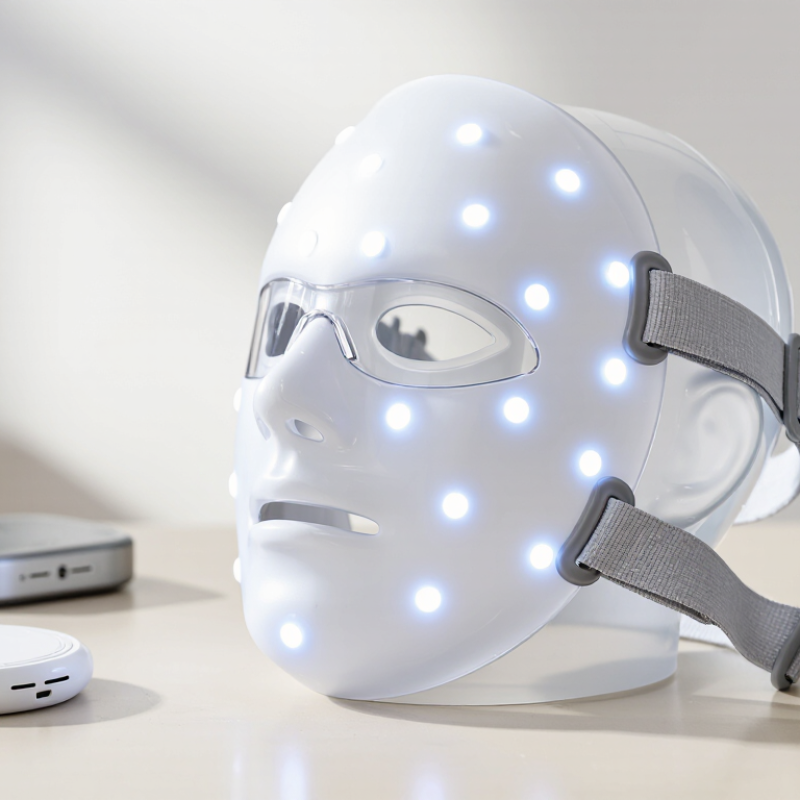
LED silicone face masks are wearable home devices using light-emitting diodes for skin-focused photobiomodulation. Flexible silicone helps the mask sit close to the face, like a soft, illuminated second skin. Most devices use red light, near-infrared light, or both. Blue light appears in some designs.

Red wavelengths may support collagen-related skin processes, while blue wavelengths may help manage acne-associated bacteria. However, results depend on wavelength, energy dose, treatment time, and skin condition. The technology sounds simple. The measurements are not.

The Global Wellness Institute’s 2024 report valued the global wellness economy at about 6.3 trillion dollars in 2023. It forecasts growth toward 9 trillion dollars by 2028. This expansion explains rising interest among global buyers, but market growth does not prove clinical effectiveness. Professional dermatology literature supports cautious optimism, not miracle claims. Silicone comfort may improve regular use, yet poor contact can create uneven exposure. Some specifications also remain confusing, especially irradiance and total fluence.

Tips: Check the stated wavelength, irradiance, treatment duration, eye protection, and cleaning instructions. Look for test reports from qualified laboratories. Do not judge quality by brightness alone. A brighter mask may feel impressive, but excessive exposure is not automatically better. Sensitive users should test gradually and stop when irritation appears. The industry still needs clearer reporting standards, and buyers should question incomplete technical data.

Key Features to Evaluate in the 2026 Best LED Face Mask

2026 Best LED Silicone Face Mask for Global Buyers

Key Features to Evaluate in the 2026 Best LED Face Mask

The best 2026 LED silicone face mask should prove its light dose, not merely advertise brightness. Check red light near 630–660 nanometres and near-infrared light around 830–850 nanometres. These ranges are commonly studied for skin-support applications. Irradiance, measured in mW/cm², matters as much as wavelength. Dose equals irradiance multiplied by treatment time.

Look for independent laboratory testing, clear eye-protection instructions, and a flexible fit around the nose and jaw. A mask that presses unevenly may leave visible treatment gaps. Heat control, charging reliability, washable silicone, and automatic shutoff also matter for daily use. The 2024 Grand View Research analysis estimated the global LED light therapy market at approximately USD 1.2 billion in 2023, with continued growth expected. However, market figures vary between reports, so growth does not prove clinical effectiveness. The American Academy of Dermatology also notes that at-home light devices may offer modest results and require consistent use. That limitation deserves attention.

Tips: Ask suppliers for wavelength tolerance, irradiance at skin level, total joules per session, and test reports. Confirm electrical certifications for each target market. Do not trust “medical-grade” wording without documentation. I would also request real user testing across different skin tones. Results can be uneven, and some marketing claims remain stronger than the available evidence. Reliability is sometimes less glamorous than extra LEDs.

2026 Best LED Silicone Face Mask for Global Buyers - Key Features to Evaluate in the 2026 Best LED Face Mask

Practical evaluation framework for comparing LED silicone face masks for international purchasing and product assessment.
Evaluation Dimension Recommended 2026 Target or Range Why It Matters How Global Buyers Should Verify It Buyer Priority
Red LED wavelength Approximately red light at 630–660 nm This range is widely used in photobiomodulation devices intended to support the appearance of skin firmness and fine lines. Request independent optical test data showing the measured wavelength and tolerance, not only marketing illustrations. Essential
Near-infrared wavelength Typically 810–850 nm when near-infrared LEDs are included Near-infrared light is commonly added to increase wavelength coverage and may reach deeper tissue than visible red light. Confirm the exact wavelength, optical output, eye-safety instructions, and whether the near-infrared LEDs are independently controlled. High
Blue LED wavelength Approximately 415–470 nm, preferably with controlled exposure Blue light is commonly used in skincare devices designed for blemish-prone skin, but it requires clear eye and skin-use precautions. Check the measured wavelength, treatment limits, contraindications, and whether a light-blocking eye shield is supplied. High when included
Irradiance at the skin A clearly documented, measured output; many consumer devices operate in the approximate range of 10–60 mW/cm² Irradiance determines how quickly a treatment delivers energy and allows buyers to compare devices more accurately. Ask for test results taken at the actual skin distance across the full face area. Avoid relying solely on LED count or electrical wattage. Essential
Energy dose per session Usually documented in J/cm²; a transparent specification is more important than a high headline number Dose combines irradiance and time, helping users understand the total light energy delivered in one session. Check that the stated dose is consistent with the formula: energy density = irradiance × treatment time. Essential
Treatment timer Automatic shut-off with a clearly stated cycle, commonly around 10–15 minutes A timer improves consistency and reduces the risk of unintentionally extending exposure. Test the timer during a sample session and confirm that the device cannot continue indefinitely without user action. Essential
Silicone material Soft, flexible, skin-contact silicone with documented material composition and low odor Flexible silicone can improve facial contact, comfort, cleanability, and fit across different face shapes. Request material declarations, skin-contact test reports, and samples for checking flexibility, seams, odor, and surface finish. Essential
Facial coverage and fit Even coverage across the forehead, cheeks, nose area, chin, and jawline without excessive gaps Uneven distance from the LEDs to the skin can produce inconsistent light exposure. Inspect a light-distribution map or use a sample to evaluate nose clearance, cheek contact, and jawline coverage. Essential
Eye protection Integrated shielding or a properly fitted eye protector, especially for blue and near-infrared modes Bright LEDs can cause discomfort, and appropriate protection is important for safe consumer use. Review photobiological safety testing, user instructions, and the physical fit of the eye area on a sample. Essential
Thermal management Low-heat operation with a comfortable skin-contact temperature and no noticeable hot spots Excess heat can reduce comfort and may be unsuitable for sensitive skin. Measure surface temperature during a full cycle and check ventilation, heat dissipation, and automatic protection features. Essential
Power and charging Rechargeable battery, USB charging, over-charge protection, and a replaceable or serviceable power component where practical Wireless operation improves mobility, while charging safety is important for international distribution. Verify battery capacity, charging input, plug or adapter requirements, protection circuitry, and transport documentation. High
Electrical and photobiological safety Documented conformity for the destination market and testing against applicable electrical and optical safety requirements Compliance requirements vary by country and may affect import clearance, retail listing, and consumer protection. Request current test reports, declarations of conformity, labeling files, and applicable battery or wireless documentation. Essential
Cleaning and hygiene Smooth, non-porous surface that can be wiped with a manufacturer-approved mild disinfecting solution A wipe-clean surface helps reduce residue and supports repeated personal or professional use. Check ingress limitations, cleaning instructions, chemical compatibility, and whether the controller must be detached before cleaning. High
Comfort and adjustability Adjustable straps, balanced weight, flexible facial contour, and no sharp edges or pressure points Comfort strongly influences regular use, especially when recommended routines require multiple sessions per week. Conduct wear tests on different face sizes and record pressure around the nose, ears, temples, and chin. High
User controls Clearly labeled controls for power, mode selection, brightness or intensity where applicable, and session status Simple controls reduce misuse and make the product easier to sell across different user groups and languages. Test buttons, indicators, mode memory, emergency shut-off, and controller usability without using a mobile application. High
Instructions and labeling Multilingual manual with treatment frequency, warnings, contraindications, cleaning steps, charging guidance, and disposal information Clear instructions support safe use and help meet documentation expectations in international markets. Review the final artwork for required languages, symbols, electrical ratings, batch traceability, and readable font size. Essential
Durability and quality control Consistent LED output, secure wiring, reinforced strap points, sealed electronics, and documented production inspection Consistent construction reduces returns, safety incidents, and performance variation between production batches. Request a quality-control plan, sample inspection records, aging tests, flex tests, charging-cycle tests, and output uniformity measurements. High
Environmental and logistics factors Protective packaging, battery transport documentation, suitable operating temperature, and reduced packaging waste International shipments may involve humidity, temperature variation, customs checks, and lithium-battery transport rules. Confirm carton drop testing, moisture protection, package dimensions, HS-code support, battery declarations, and storage conditions. High

Note: Specifications should be confirmed through current technical documentation and independent testing for the intended market. LED light devices are not a substitute for professional medical diagnosis or treatment.

Safety Standards, Skin Compatibility, and Proper Usage

2026 Best LED Silicone Face Mask for Global Buyers
Safety Standards, Skin Compatibility, and Proper Usage

A reliable LED silicone face mask should provide clear safety information before purchase. Look for documented electrical testing and photobiological safety assessment, such as IEC 62471 where applicable. Skin-contact materials should have evidence of biocompatibility testing, including relevant ISO 10993 methods. Requirements differ between countries, so buyers should verify local import and consumer product rules.

Check the light spectrum, intensity, session length, and eye protection instructions. Red light commonly falls near 630–660 nanometers, while near-infrared light may range from 810–850 nanometers. These figures do not prove effectiveness. They only describe the emitted light. In product evaluations, I would also inspect heat, cable strain, charging safety, and the mask’s contact with the nose and cheeks. Small pressure points matter.

Skin compatibility needs personal testing. Clean the mask before use, then try a short session on dry skin. Stop if burning, swelling, persistent redness, or eye discomfort appears. Avoid use over broken skin. People taking photosensitizing medicines or managing light-sensitive conditions should ask a qualified clinician first. Follow the stated schedule, rather than assuming longer sessions work better. Three sessions weekly may be more practical than daily overuse. Instructions are sometimes vague, and that is a weakness worth questioning. Keep records of irritation and skin changes. Clean the silicone surface after each session, and never share an unclean device.

Comparing Light Modes, Fit, Battery Life, and Material Quality

For global buyers, the best LED silicone face mask should offer clear light modes, not a confusing list of settings. Red light is commonly selected for a gentler daily routine, while blue light may suit specific skincare preferences. Near-infrared light can add depth, but published wavelengths matter more than colorful packaging. Check the stated nanometer range and treatment duration. I would avoid models that hide both details.

Fit affects real use more than many product pages admit. A flexible silicone body should rest evenly across the cheeks, nose, and forehead without sharp pressure points. Adjustable straps help, especially for different face shapes. During testing, I look for light gaps and movement while walking. A mask that slips after ten minutes becomes an expensive drawer item. Comfort is personal, though, and even a well-designed shape may not suit everyone.

Battery life should cover several complete sessions after one charge. Around six to ten timed sessions feels practical for travel and weekly routines. A visible battery indicator is useful; otherwise, users may discover a dead device unexpectedly. Material quality deserves close attention too. Look for smooth, low-odor silicone, secure wiring, and a controller that feels solid. Wipeable surfaces matter after skincare use. I once valued extra light modes over better construction, and that choice proved disappointing. More features are not always better.

2026 Best LED Silicone Face Mask for Global Buyers

Typical specification ranges reported in consumer LED mask listings. Use the ranges as a buyer-screening reference rather than a performance guarantee.

Light modes

Red light is commonly listed around 630–660 nm, near-infrared around 810–850 nm, and blue light around 415–470 nm.

Fit and comfort

Adjustable straps and multiple fastening points can help improve face coverage and reduce pressure during treatment.

Battery life

A typical rechargeable battery range is approximately 1.5–3 hours, depending on session length and light intensity.

Material quality

Flexible silicone masks commonly specify approximately 2–4 mm material thickness; buyers should verify skin-contact and safety documentation.

How Global Buyers Can Select Reliable Suppliers and Products

2026 Best LED Silicone Face Mask for Global Buyers

Global buyers should evaluate suppliers before comparing prices. Request a factory profile, production address, quality certificates, and recent test reports. A reliable supplier should explain LED wavelength, irradiance, treatment time, battery capacity, and charging protection in clear language. Vague answers create avoidable risk.

Inspect a physical sample under normal use. Check whether the silicone feels flexible, the mask sits evenly, and the controller responds without delay. Ask for photobiological safety testing, electromagnetic compatibility records, and battery transport documents where applicable. Confirm whether the product is marketed for cosmetic use or medical treatment. Those categories may require different evidence in each destination market. Do not treat one regional certificate as global approval.

Supplier history also matters. Review batch inspection records, defect rates, warranty terms, spare-part support, and packaging photos. A small pilot order can reveal loose connectors, uneven light output, or unpleasant silicone odor. It is easy to trust a polished sample too quickly. That is a mistake. Require a written specification sheet, approved sample, and change-control process before production. I would also verify translations, user instructions, and local labeling rules with a qualified compliance professional. Product selection remains imperfect when test conditions differ from real skin, real charging habits, and real customer expectations.